The first scrape is easy to dismiss as road grit. A few days later, it follows every stop, and now you can feel roughness through the pedal. Or the sound begins suddenly while the car is rolling, even before your foot touches the brake.
Those are different complaints, and neither should be diagnosed by volume alone. Persistent grinding, reduced braking, pulling, or a changed pedal is a reason to stop using the vehicle and arrange a check. A sound that seems to come from one wheel can involve hidden brake surfaces you cannot see through the spokes.
Worn Pads Can Leave Metal Against the Rotor
Brake pads have friction material bonded to a backing plate. If that lining wears away, the backing plate can contact the rotor and create a harsh grinding sound during braking. The rotor surface can be damaged quickly, and braking performance can change as the metal surfaces rub together.
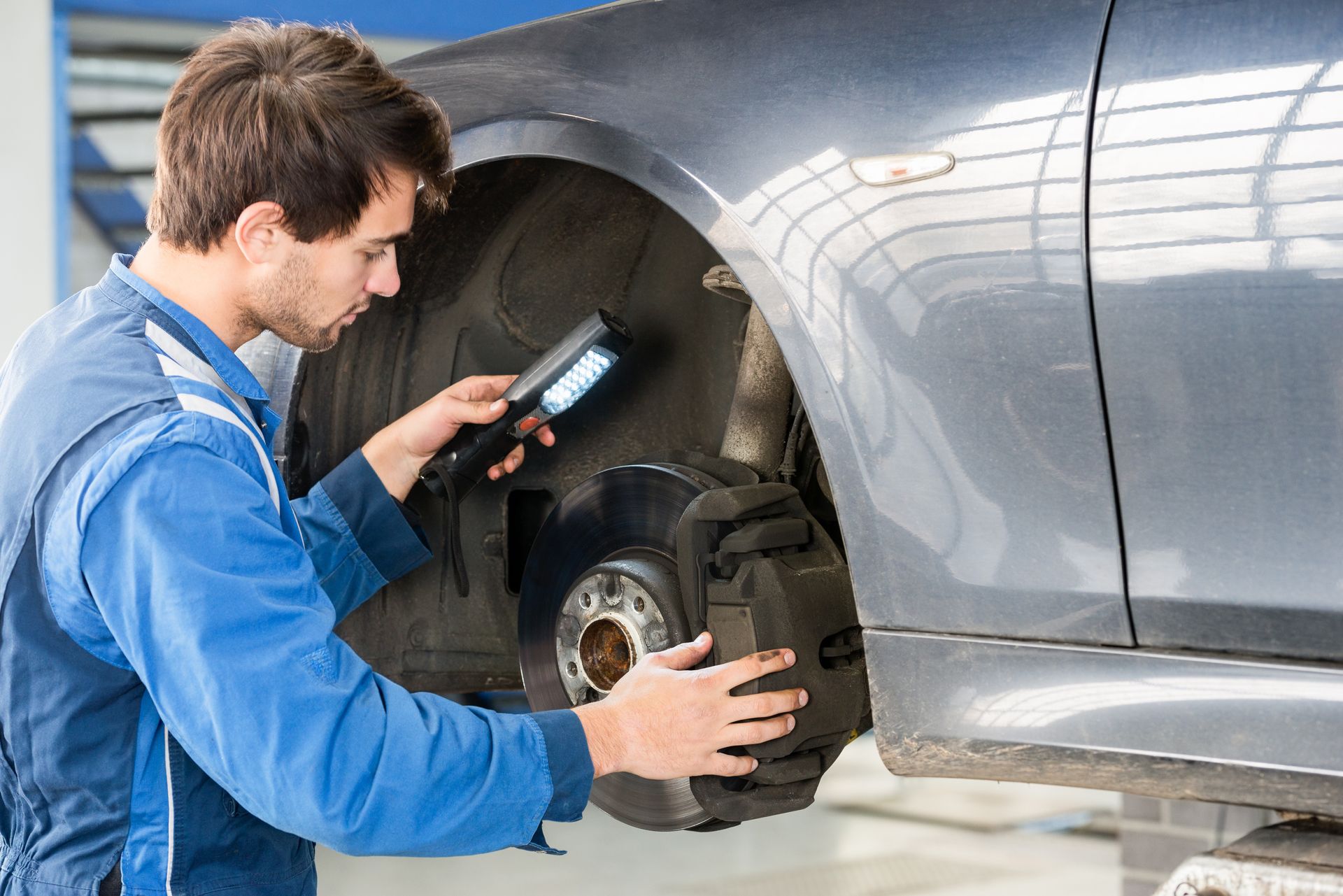
A quiet outer pad doesn't prove the inner pad has useful material left. We check both pads and the rotor faces at each affected wheel. Uneven wear can leave one pad exhausted while its partner still looks substantial, which is one reason a glance through the wheel can give false reassurance.
A Sticking Brake Can Wear One Pad Out Early
Caliper pistons, slide pins, pad contact points, and hydraulic release all affect whether a brake lets go properly. If a pad remains against the rotor between stops, it builds heat and wears faster. A hot odor, heavy dust at one wheel, or a car that doesn't coast as freely can accompany the noise.
Replacing the pads alone leaves the cause untouched. The moving parts and hose behavior need evaluation before new friction material is installed. Overheated or contaminated components also need to be assessed for reuse. The repair should explain why the old pads wore differently, rather than treating every grinding brake as a simple overdue pad replacement.
Light Surface Rust Has a Different Pattern
Moisture can leave a thin rust layer on exposed cast-iron rotors while a vehicle is parked. That can create a light scrape during the first ordinary stops, then clear. A car that has sat longer can develop heavier corrosion that does not disappear so easily.
Do not assume ongoing grinding is harmless rust because it followed rain. A sound that persists, gets stronger, or comes with pedal vibration or pulling needs diagnosis. Repeated hard braking to grind the rotor clean is not a safe owner test. The condition of the friction surfaces should determine whether cleaning, service, or replacement is appropriate.
Debris and Shields Can Scrape Without Worn-Out Pads
A small stone trapped near the rotor or a bent backing shield can produce a sharp scrape while the wheel turns. The sound might change in a turn or continue with your foot off the brake. That differs from a noise produced only when pads clamp the rotor, although sounds can overlap.
During an inspection, we look for contact marks, trapped debris, loose hardware, and shield clearance alongside pad wear. A wheel bearing or another rotating component can also create a rough noise in the same area. The aim is to locate the contact rather than replace brakes solely because the sound seems to be near a wheel.
Pedal Feel and Vehicle Direction Help Set the Urgency
A softer pedal, unusually hard pedal, longer stopping distance, or steering pull alongside grinding needs urgent attention. Smoke or a strong hot-brake smell is another reason to stop safely and arrange assistance. Don't touch a wheel or brake component to compare temperatures; it can be hot enough to burn skin.
There is no useful answer to how many miles a grinding brake has left without examining it. Even a vehicle that still stops can have a damaged rotor or one brake dragging badly. Call with the symptoms and ask about safe transport rather than planning another day's errands around the noise.
Check the Entire Repair Before Returning to the Road
A brake repair may involve pads, rotors, hardware, a caliper, or hydraulic components, but the list should follow the findings. Rotors need assessment against the manufacturer's limits, and friction parts should be serviced in the appropriate axle sets. Correct movement and release are as necessary as adequate pad thickness.
After assembly, pedal operation, leaks, braking balance, and the specified bedding procedure need verification. Records from regular maintenance can help establish whether the wear developed normally or accelerated unexpectedly. A completed repair should leave an explanation of the grinding and its cause, not simply a receipt showing that new pads were fitted.
Get Brake Grinding Diagnostics In Greenville, NC, With Bells Fork Truck and Auto Service
Bells Fork Truck and Auto Service in Greenville, NC, can check the hidden pad surfaces, rotors, calipers, and hardware behind a grinding complaint. Mention any pulling, pedal change, or hot smell before bringing the vehicle in.
Contact us to schedule a brake assessment and discuss safe transport if your braking has changed.