Brake problems are not always loud, sudden, or obvious. A lot of drivers expect the brakes to squeal, grind, or shake before anything is wrong. Sometimes that happens. Other times, the warning signs are small enough that they blend into everyday driving.
That is where trouble starts. The brake pedal feels a little different, the car takes slightly longer to stop, or one wheel has more brake dust than the others. None of it feels urgent at first. But brakes wear gradually, and the earlier signs are often the ones that give you the best chance to fix the issue before it becomes more expensive.
1. A Brake Pedal That Feels Slightly Different
Your brake pedal should feel familiar every time you drive. It should not feel lower than usual, softer than normal, harder to press, or inconsistent from one stop to the next. Small changes in pedal feel can be easy to overlook because they do not always happen overnight.
A soft pedal can point to air in the brake lines, old brake fluid, a leak, or a hydraulic issue. A hard pedal can be caused by vacuum assist trouble or another pressure-related problem. If the pedal slowly sinks while you are stopped, that deserves attention. Brake pedal changes are not something to get used to.
2. Longer Stopping Distance
A car that takes longer to stop may not feel broken right away. Many drivers simply start braking earlier without realizing they have changed their habits. That adjustment can hide worn pads, glazed rotors, old brake fluid, tire wear, or calipers that are not applying evenly.
A longer stopping distance becomes more noticeable in traffic, in rain, or when another driver stops suddenly. Brakes should respond confidently with normal pedal pressure. If you feel like you have to press harder than before, or the vehicle does not slow down as quickly as it used to, the brake system should be checked.
3. Uneven Brake Wear
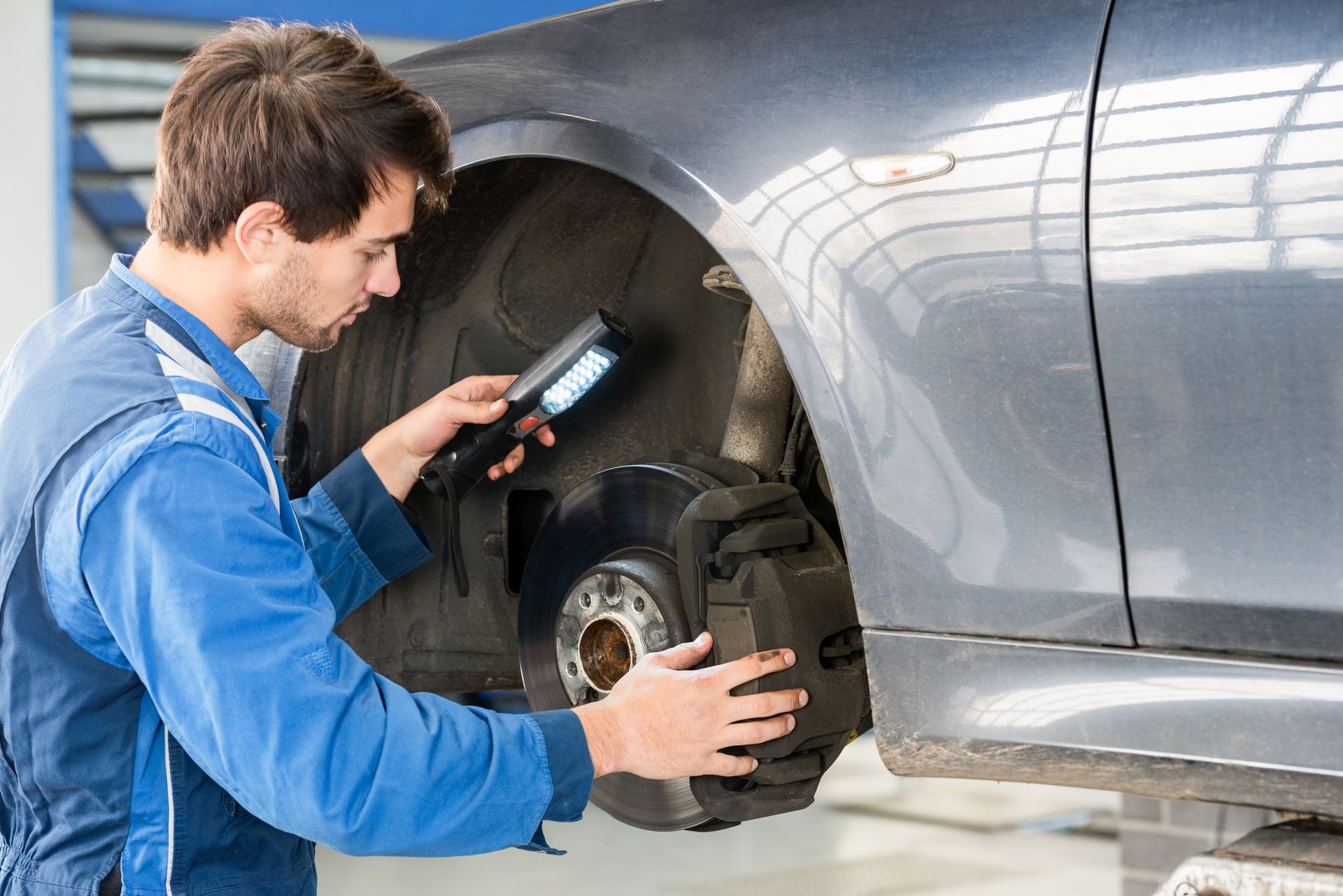
Uneven brake wear is one of those problems drivers rarely notice until the wheels are off. One side may wear faster than the other, or one pad may be much thinner than its partner on the same axle. That can happen when caliper slide pins stick, hardware seizes, a brake hose restricts fluid flow, or a caliper does not release correctly.
You might see clues from the outside. One wheel may have more brake dust. The car may pull slightly when braking. A hot smell may come from one corner after driving. Uneven wear can damage rotors and shorten the life of new pads if the cause is not repaired.
4. Brake Fluid That Is Old Or Contaminated
Brake fluid does not get much attention, but it does important work. It transfers pressure from the brake pedal to the brakes at each wheel. Over time, brake fluid absorbs moisture, and that moisture can lower the fluid’s boiling point and contribute to corrosion inside hydraulic parts.
Old fluid can affect pedal feel during repeated braking, long downhill drives, or hot weather. It can also be hard on calipers, brake lines, ABS parts, and the master cylinder. Regular maintenance helps keep brake fluid from being forgotten until it creates a bigger problem.
Why Brake Noise Is Not The Only Warning
Noise is useful, but it is not the only way brakes ask for help. Some brakes squeal because the pads are worn. Others squeak because of dust, hardware, pad material, or rotor surface issues. Grinding usually means the situation has already gone further than it should.
Quiet brakes can still be worn. A vehicle can stop without noise while pads are thin, fluid is old, or a caliper is dragging. Waiting for sound alone can leave you reacting late. The feel of the pedal, stopping distance, vehicle pull, smell, and visual wear all count.
A Small Pull Or Vibration Can Mean Something
If your car pulls to one side when braking, it may be braking harder on one side than the other. That can happen because of caliper trouble, hose issues, uneven pad wear, tire problems, or suspension concerns. A vibration or pulsing feeling can point toward rotor issues or uneven brake surface contact.
These symptoms are easy to blame on the road, especially if they come and go. Still, if the same pull or vibration keeps returning when you brake, it needs an inspection. Brakes, tires, steering, and suspension work together, so the whole area should be checked rather than assuming the pads are the only issue.
Why Early Brake Checks Save Money
Brake repairs usually get more expensive when worn parts damage other parts. Thin pads can ruin rotors. Sticking calipers can overheat pads and fluid. Old brake fluid can contribute to corrosion. A small hydraulic leak can become a much bigger safety concern.
The best time to check brakes is before they feel scary. A proper brake check looks at pad thickness, rotor condition, caliper movement, brake hoses, hardware, fluid condition, leaks, and pedal feel. That gives you a clearer idea of what needs repair now and what can be watched for later.
Get Brake Repair In Greenville, NC, With Bells Fork Truck and Auto Service
If your brake pedal feels different, your car takes longer to stop, or you notice pulling, vibration, dust, heat, or noise, Bells Fork Truck and Auto Service in Greenville, NC, can check the system and explain what is going on.