Your suspension does more than soften bumps. It keeps the tires controlled, supports steering accuracy, limits body movement, and helps the vehicle remain stable during braking. When a suspension part begins wearing, noise is often one of the first signs that something is moving farther than intended.
A faint clunk or squeak may appear only on rough pavement at first. As wear increases, the sound can become louder and may be joined by loose steering, uneven tire wear, pulling, or extra bouncing. These five suspension noises deserve attention before the affected part damages nearby components or changes how the vehicle handles.
1. Clunking Over Bumps
A clunk over potholes, speed bumps, or driveway entrances often comes from a part with excessive clearance. Worn sway bar links, control arm bushings, ball joints, strut mounts, or loose shock hardware can all create a similar sound. The clunk may occur when only one wheel moves or when the suspension changes direction quickly.
Noise can travel through the frame, so the side that sounds loudest from the cabin is not always where the problem begins. A technician may need to check the suspension under load and move each joint by hand. Ignoring the sound can allow looseness to affect alignment, tire wear, and steering response.
2. Squeaking During Turns Or Suspension Movement
A squeak often develops when rubber bushings dry out, crack, or begin separating from their sleeves. Ball joints and other sealed joints can also squeak if lubrication escapes or contamination enters. The sound may appear while turning the steering wheel, entering a parking lot, or moving slowly over uneven pavement.
Some squeaks change with temperature or moisture, which can make them disappear before the vehicle reaches the shop. Even when the noise is intermittent, it is useful to note whether it comes from the front or rear and whether steering input changes it. Spraying lubricant onto random parts may briefly hide the noise without correcting the wear.
3. Knocking When Braking Or Accelerating
A knock that appears when you press the brake or accelerator often means a suspension or drivetrain component shifts as force changes direction. Control arm bushings are a frequent cause because they help keep each wheel positioned during braking and acceleration. A damaged bushing can allow the wheel to move forward or backward before the arm reaches its limit.
Loose subframe mounts, engine mounts, ball joints, or brake hardware can produce a similar knock. The vehicle may also pull, feel unsettled during stops, or clunk when shifting between drive and reverse. A complete inspection helps separate suspension movement from drivetrain or brake concerns before parts are replaced.
4. Rattling On Rough Roads
A light metallic rattle over broken pavement may come from worn sway bar links, loose shock hardware, damaged spring seats, or a component touching the body. Heat shields, exhaust hangers, brake clips, and loose underbody panels can sound very similar, so the suspension should not be blamed based on noise alone.
Rattles can remain quiet on a flat road because the affected part needs repeated small impacts to move. The technician may road-test the vehicle over the type of surface that produces the sound and then check for polished contact marks, loose fasteners, and movement around mounting points. Early repair can prevent a loose part from damaging its bracket or connection.
5. Popping Or Snapping While Steering
A popping sound while turning can involve a strut mount, coil spring, ball joint, control arm bushing, or steering component. On vehicles with front struts, the upper mount and bearing allow the assembly to rotate with the steering. If the bearing binds, the spring may twist and release suddenly with a pop.
A broken coil spring can also shift inside its seat and make noise during turns or over bumps. Look for uneven ride height, tire rubbing, or one corner sitting lower than the others. A pop joined by loose steering or sudden changes in vehicle direction should be checked before the vehicle returns to highway driving.
Other Changes That Can Appear With Suspension Noise
Suspension wear does not always create noise by itself. As movement increases, the vehicle may begin showing several changes at once. You may notice more body lean, repeated bouncing after dips, steering that requires frequent correction, or tires wearing unevenly along the edges.
A worn shock or strut may allow the tire to hop, while a loose joint can prevent alignment settings from remaining consistent. Regular maintenance creates opportunities to find leaking dampers, cracked bushings, and damaged boots before they become loud enough to hear from the cabin.
Why Prompt Diagnostic Is Important
Suspension parts work as a connected system. A weak strut can contribute to tire cupping, a damaged bushing can change alignment, and a loose ball joint can affect steering control. Waiting until the noise becomes severe may increase the number of parts involved in the repair.
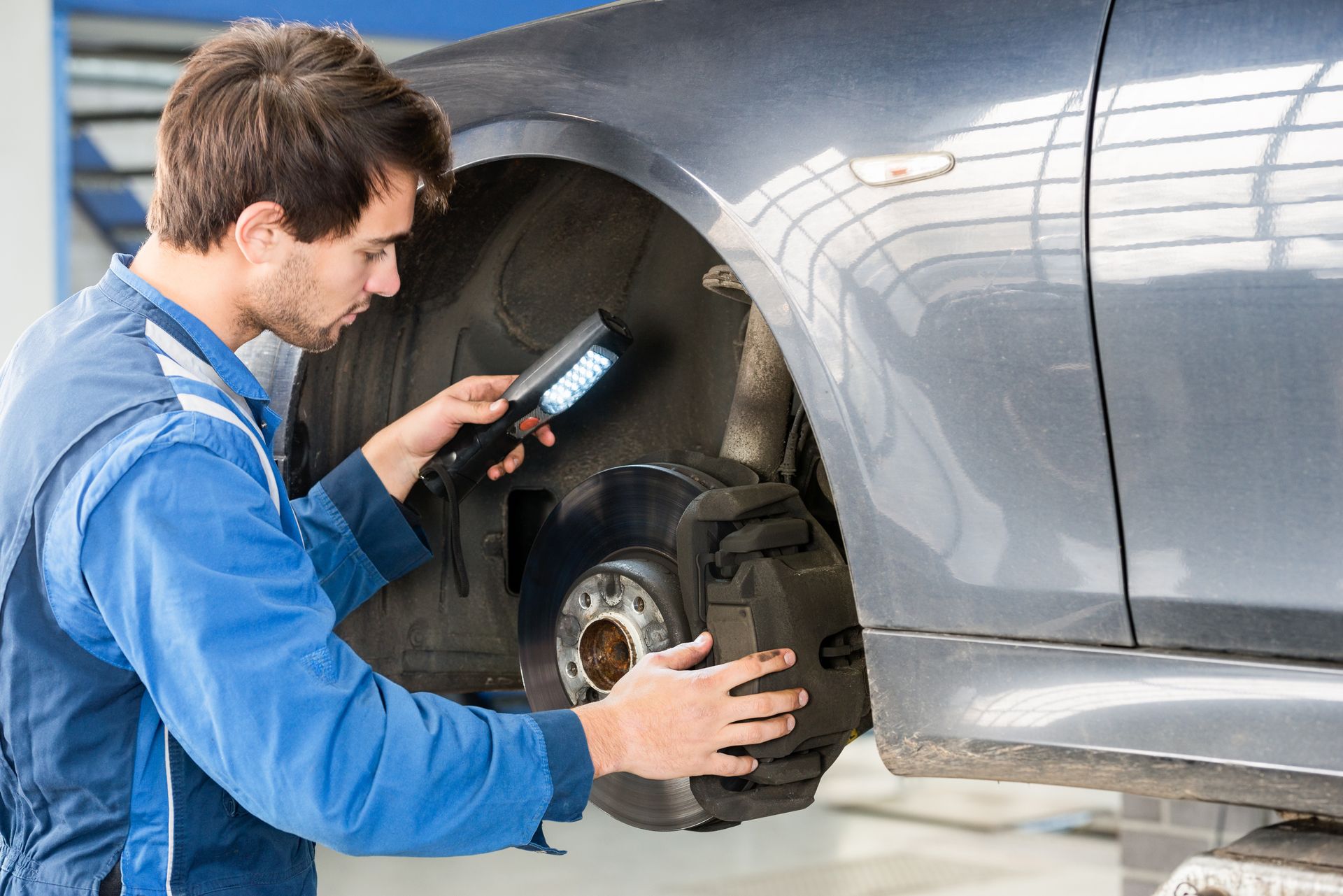
Diagnosis may include a road test, tire examination, ride-height measurements, and hands-on checks of the shocks, struts, springs, bushings, links, joints, bearings, and mounting points. Explaining when the noise appears helps the technician reproduce it under the correct conditions.
Get Suspension Noise Diagnostics In Greenville, NC, With Bells Fork Truck and Auto Service
If your vehicle clunks, squeaks, knocks, rattles, or pops over bumps and during turns, Bells Fork Truck and Auto Service in Greenville, North Carolina, can evaluate the suspension, steering, tires, brakes, and related mounting components.